
Why Millions Are Switching to Solar Energy in 2026
Why Millions Are Switching to Solar Energy in 2026
Electricity bills are climbing. Grid outages are becoming more common. And homeowners everywhere are asking the same question: Is there a smarter way to power my home? In 2026, the answer is clearer than ever. Solar energy has evolved from a niche green investment into one of the most practical, cost-effective decisions a homeowner can make - and the numbers prove it. Whether you're in Scandinavia, Germany, the UK, Canada, or Australia, the solar revolution is already happening on rooftops near you.
The Old Energy Model Is Broken
For decades, households had no choice but to rely entirely on the grid. You paid whatever the energy company charged - no questions asked. But that model is cracking under pressure. Energy prices have surged across Europe, the UK, Canada, and Australia, driven by global instability, ageing infrastructure, and increasing demand.
The result? Millions of households are overpaying every single month for electricity they could be generating themselves - for free - from the sun.
Solar in 2026 Is Not What You Think
Many homeowners still picture solar as expensive, complicated, or only viable in sunny climates. That thinking is outdated. Today's solar technology has transformed dramatically:
- Next-generation panels (TOPCon, HJT, IBC) capture significantly more energy per square metre - even in cloudy conditions.
- AI-powered smart inverters automatically optimise your energy use in real time, reducing waste.
- Home battery storage means you can store solar energy during the day and use it at night - cutting your grid dependency dramatically.
- EV integration lets you charge your electric vehicle directly from your own solar production.
In 2026, a solar system isn't just panels on a roof. It's an intelligent energy ecosystem for your home.
The Financial Case Has Never Been Stronger
Let's talk money - because that's what ultimately matters to most homeowners.
Installing a modern solar system can reduce your household electricity bill by anywhere between 50% and 90%, depending on your location, usage, and system size. Government incentive programmes across multiple countries - including VAT reductions, green energy grants, and feed-in programmes - further reduce the upfront investment required.
Here's what homeowners are experiencing in 2026:
- Households pairing solar panels with battery storage are increasing their self-consumption of solar energy from ~30% to over 70%.
- Solar installations are consistently increasing property values - homes with smart solar infrastructure sell faster and at a premium.
- In high-sunlight regions, payback periods have dropped to as little as 3-5 years. In northern climates, modern systems still deliver payback within 8-12 years.
What About Cloudy Climates? (Yes, Solar Works There Too)
This is one of the most common concerns - and one of the biggest myths. Countries like Germany, Sweden, Denmark, and the UK are among the world's top solar adopters, despite their notoriously grey skies.
Why? Because modern solar panels don't need direct sunlight - they generate electricity from daylight. And with battery storage, every kilowatt-hour generated on a bright afternoon is saved for use on a cloudy evening.
Germany, for example, generates a significant share of its national electricity from solar PV. Scandinavia is catching up fast, driven by government green energy targets and rising consumer awareness.
The Smart Solar Home: What It Looks Like
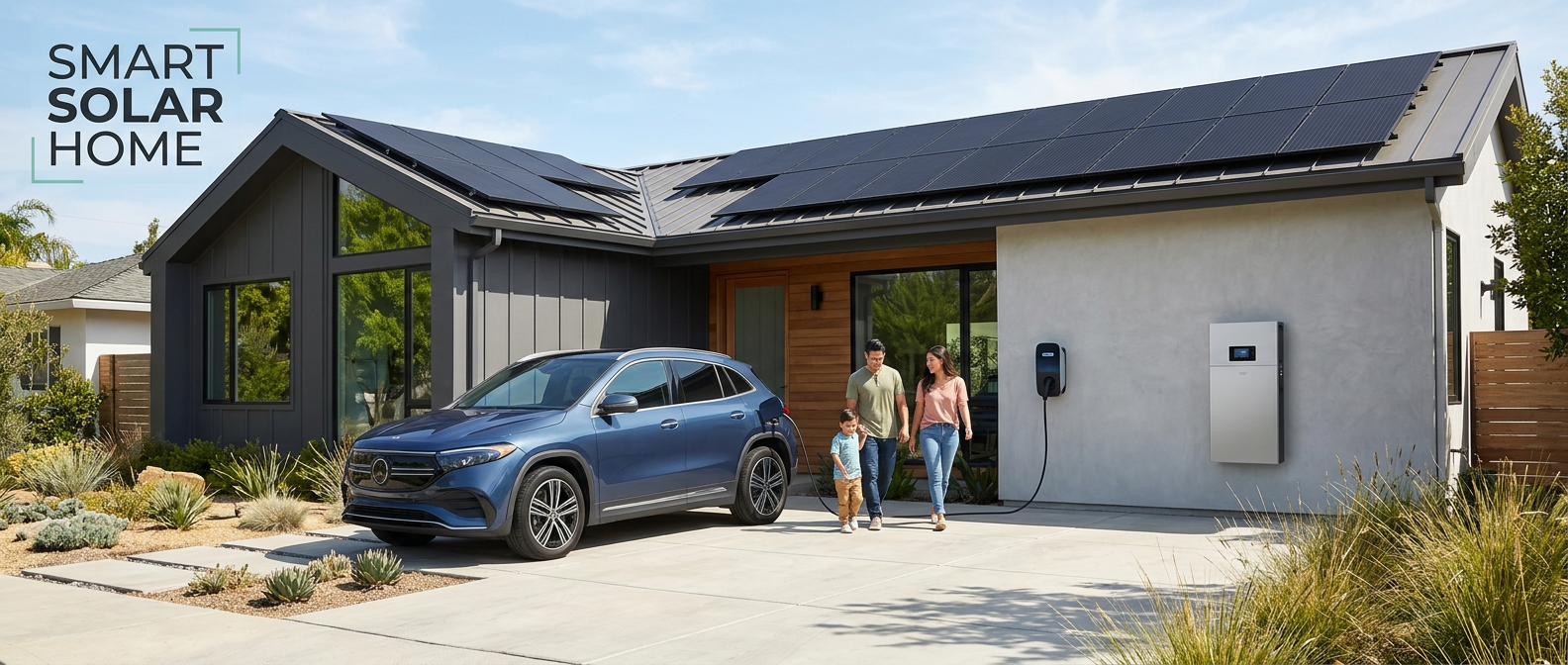
The concept of the "smart solar home" is no longer futuristic - it's what many progressive homeowners are installing right now. Here's what a complete modern setup typically includes:
- High-efficiency solar panels - mounted on the roof (or even as a balcony system for apartments).
- A hybrid smart inverter - manages energy flow between panels, battery, grid, and home appliances.
- A home battery unit - stores surplus solar energy for use during evenings or outages.
- An energy monitoring app - gives you real-time visibility of your production, consumption, and savings.
- EV charging integration (optional) - charge your car using your own solar power.
This kind of integrated system offers genuine energy independence - something that was practically impossible for ordinary households just five years ago.
Common Mistakes Homeowners Make Before Going Solar
Not all solar decisions are equal. Here are the most frequent mistakes to avoid:
- Choosing on price alone. The cheapest quote often means lower-quality panels or a poorly sized system that underperforms for years.
- Ignoring battery storage. Panels without storage mean you export your cheapest energy back to the grid at low rates - and then buy it back at peak prices.
- Not checking installer credentials. Always verify that your installer is certified and experienced with systems in your local climate.
- Skipping an energy audit. Understanding your home's actual consumption patterns first leads to a far better-sized, more efficient system.
Is 2026 the Right Time to Go Solar?
Honestly? Yes - and here's why this moment is particularly compelling.
Panel technology is mature and proven. Battery costs have fallen sharply over the past three years. Government incentive programmes are active across the UK, EU, Scandinavia, Canada, and Australia - but many are time-limited or subject to future changes. Waiting often means paying more for electricity while missing out on available subsidies.
Early adopters who installed solar systems even five years ago are now largely operating with paid-off systems, generating essentially free electricity. Those who waited are still paying full grid prices.
Finding the Right Solar Solution for Your Home
The best solar setup depends on factors specific to your home: roof orientation, local climate, household energy consumption, available incentives, and your long-term energy goals. A system that's perfect for a home in southern Germany may differ significantly from one designed for a home in northern Sweden or coastal Australia.
That's why the most important step any homeowner can take is to explore the options available for their specific situation - comparing certified local installers, understanding what government programmes apply to them, and getting a proper energy assessment before committing.
The right information makes all the difference between a system that transforms your energy bills and one that disappoints.
The Bottom Line
Solar energy in 2026 is not a gamble - it's a proven, globally-adopted solution to one of every household's biggest recurring costs. With smarter technology, stronger financial incentives, and falling installation prices, the question is no longer "Should I go solar?" - it's "How do I find the best solar solution for my home?"
Exploring your options is the smartest first step you can take. The more specific your search - by system type, incentive programme, or certified installer - the faster you'll find a solution that genuinely works for you.