
Tanzania & Zanzibar: The Ultimate Safari and Beach Journey
Few destinations on Earth manage to combine two completely different worlds in a single trip. Tanzania offers one of the last truly wild safari landscapes on the planet. Zanzibar, just a short flight away, delivers white-sand beaches, turquoise waters, and centuries of rich culture. Together, they create an experience that stays with you long after you return home. Whether you are a first-time traveler or a seasoned explorer, this pairing never fails to leave a mark.
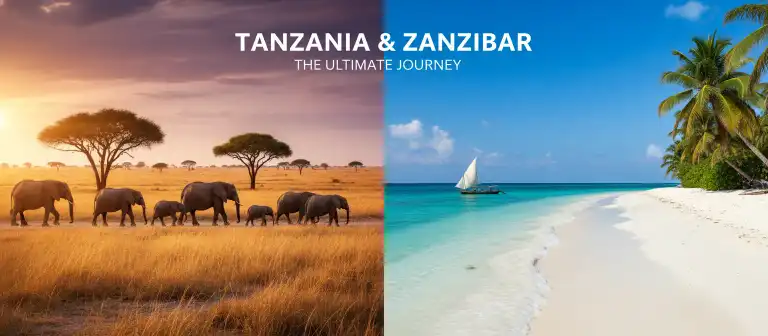 Why Tanzania Is Unlike Any Safari Destination
Tanzania is home to some of the most iconic wildlife habitats in the world. The Serengeti alone stretches over 14,000 square kilometers of open savanna, hosting the legendary Great Migration - a natural spectacle where over a million wildebeest and zebra move across the plains in search of fresh grass.
But the Serengeti is just one chapter. Tanzania's northern circuit also includes:
- Ngorongoro Crater - the world's largest inactive volcanic caldera, with one of the highest concentrations of lions anywhere and one of the few remaining places to spot the endangered Black Rhino.
- Tarangire National Park - famous for its enormous elephant herds wandering among ancient baobab trees, and far less crowded than the Serengeti.
- Lake Manyara National Park - a compact but diverse park known for tree-climbing lions and vast flocks of flamingos.
For those wanting a more remote, off-the-beaten-path experience, Tanzania's southern circuit - anchored by Nyerere National Park and Ruaha - has recently become far more accessible thanks to a new airstrip that opened in early 2026, allowing fly-in access that cuts out long overland drives entirely.
The Serengeti Calendar: Timing Your Safari
One of the most common questions travelers ask is: when is the best time to go? The honest answer is that Tanzania offers something extraordinary year-round, depending on what you want to see.
- January - March: Calving season in the southern Serengeti (Ndutu). Thousands of wildebeest give birth, drawing predators for dramatic action. It is also a quieter, greener time.
- June - October: The famous river crossings at the Mara River in the north. Wildebeest and zebra plunge into crocodile-filled waters in one of the most dramatic wildlife events on the planet.
- November - December: Short rains freshen up the landscape, bird life is at its peak, and the parks are less crowded.
A key trend in 2026 is the rise of "fly-in safaris," where travelers take small bush planes directly into the parks instead of enduring long overland drives. This maximizes time in the wilderness and has become especially popular on honeymoon and luxury itineraries.
Zanzibar: More Than Just a Beach
After days of game drives and dusty tracks, Zanzibar delivers something completely different. The island is a sensory experience - the scent of cloves and cardamom in the air, the sound of the Indian Ocean, and the sight of dhow boats silhouetted against a sunset.
Stone Town, Zanzibar's historic capital, is a UNESCO World Heritage Site - a labyrinth of narrow alleyways, ornate carved doors, mosques, and spice markets that tell the story of the island's Swahili, Arab, Indian, and Portuguese influences.
Beyond Stone Town, the island offers:
- Mnemba Atoll - one of East Africa's premier snorkeling and diving spots, with vibrant coral reefs, sea turtles, and dolphins. Early morning visits (before 7am) offer the clearest water and fewest crowds.
- Spice Farm Tours - a hands-on way to discover why Zanzibar was once called the "Spice Island," tasting fresh vanilla, cloves, cardamom, and nutmeg straight from the plants.
- Nungwi and Kendwa Beaches - the island's most popular northern beaches, known for their white sand and low-tide swimming all day long.
- The Rock Restaurant - a world-famous dining experience perched on a coral rock in the ocean, accessible by foot at low tide and by boat at high tide.
Cultural Highlights Worth Planning Around
Zanzibar's cultural calendar adds another layer of depth for travelers who want more than sun and sand. In 2026, notable events include:
- Sauti za Busara (February 5-8): One of Africa's most celebrated music festivals, held in Stone Town at the larger Mnazi Mmoja Grounds in 2026 to accommodate growing crowds.
- Zanzibar International Film Festival (June 24-28): A showcase of African and Indian Ocean cinema set against the backdrop of Stone Town's historic architecture.
- Mwaka Kogwa (July): The Shirazi New Year celebration in the village of Makunduchi - a vibrant, joyful event featuring traditional rituals and festivities.
What to Know Before You Go
A little preparation goes a long way in making a Tanzania-Zanzibar trip seamless. A few essentials to keep in mind:
- Visas: Most travelers need a visa to enter Tanzania. The e-visa system is straightforward - apply online at least three weeks before departure. Costs typically range from $50 to $100 depending on nationality.
- Currency: The US Dollar is widely accepted, but only notes printed after 2009. Older bills are routinely rejected by banks and businesses.
- Plastic Ban: Tanzania has a strict ban on single-use plastic bags. Travelers should leave them at home and use alternatives for toiletry bags and packing.
- Booking Ahead: For the most popular safari windows (July-September) or holiday periods, lodges and camps in the Serengeti book out well in advance. Planning ahead is strongly recommended.
Choosing the Right Type of Trip
Tanzania and Zanzibar cater to a remarkably wide range of travel styles. A classic introductory itinerary runs 7-8 days, combining a few days on safari with a beach stay in Zanzibar. For those who want to go deeper, 10-12 day packages typically include multiple parks plus a full week on the island.
Honeymooners and luxury travelers often opt for fly-in itineraries with private camps in the Serengeti and exclusive villa stays in Zanzibar, while independent and mid-range travelers can find excellent value through group lodge safaris paired with standard beach resorts.
The experience genuinely scales to fit different budgets and ambitions - which is part of what makes Tanzania and Zanzibar one of the most versatile travel destinations in the world.
Find the Right Tanzania & Zanzibar Package for You
The details of any great trip come down to specifics: which parks, which season, which style of accommodation, and which island experiences match your personal priorities. Generic advice only goes so far. The best way to move forward is to explore specific itineraries, compare package options, and look into what different operators offer for your travel window. Use the search terms below to find current packages, pricing, and availability matched to your interests and travel dates.
Tanzania and Zanzibar together represent something rare in modern travel - a destination that genuinely delivers on its promise. From the open plains of the Serengeti to the coral reefs of Mnemba Atoll, and from the spice-scented alleys of Stone Town to a sundowner on a private beach, this is a journey worth exploring in detail. Take the next step and search for the itinerary that fits your vision of the trip.