
Is Your Roof Trying to Tell You Something?
That small brown stain on your ceiling. The shingle you spotted on the lawn after last week's storm. The draught you can't quite locate. Your roof is the single most important protective layer your home has - and when it starts to fail, it rarely gives you a second warning. The good news? Knowing what to look for, and acting early, can save you thousands. Here's what every homeowner needs to know before calling a roofer - or before the next big storm makes the decision for you.
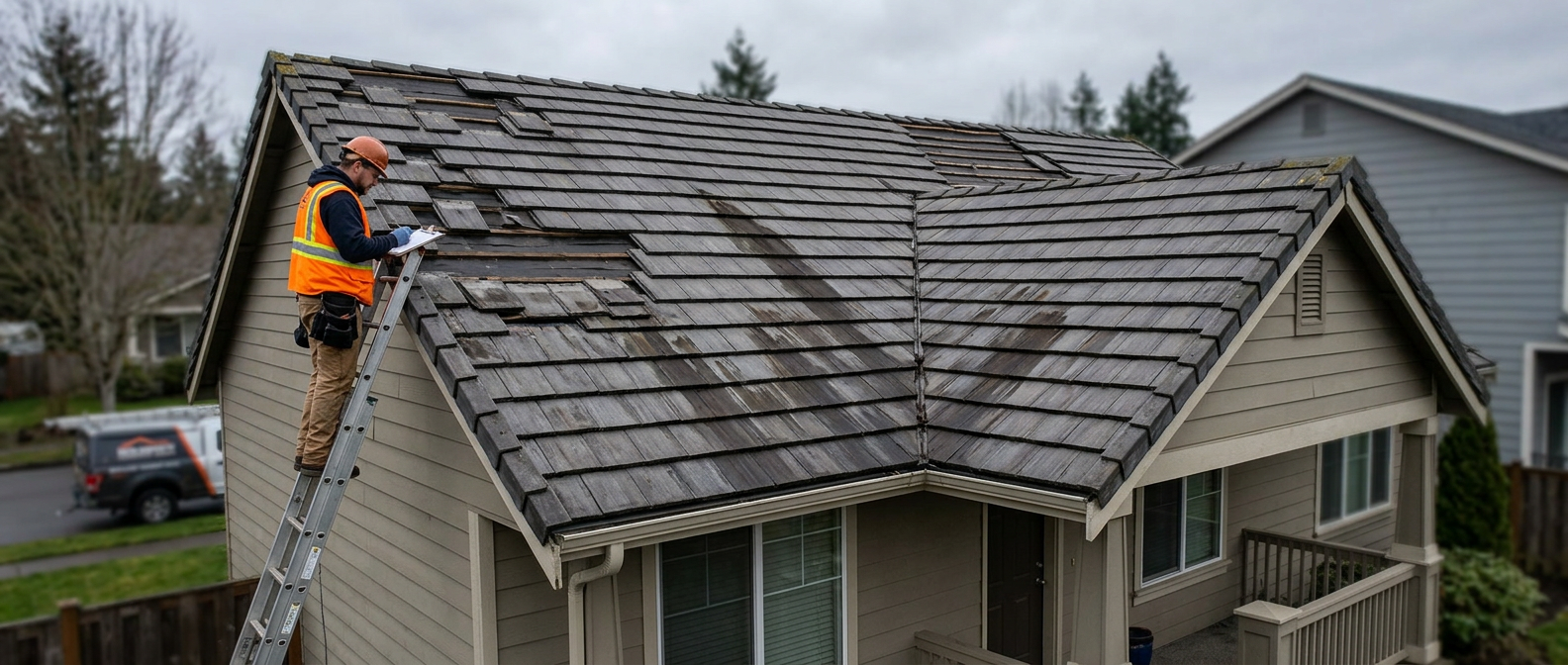
The Warning Signs Most Homeowners Miss
Roof damage doesn't always announce itself with a dramatic leak. Most problems develop quietly over months or even years. By the time water is dripping through your ceiling, the structural damage is already significant - and significantly more expensive to fix.
Watch closely for these early warning signs:
- Cracked, curling, or missing roof tiles/shingles - exposed areas invite water instantly.
- Dark staining or algae growth on the roof surface - a sign of trapped moisture.
- Sagging sections along the roofline - this points to structural weakness or rotted decking.
- Higher energy bills - a failing roof allows heat to escape in winter and flood in during summer.
- Granules collecting in gutters - asphalt and composite materials shed protective granules as they age.
- Daylight visible in the loft or attic - if light can get through, so can rain.
Catching any two or more of these signs together is a strong indicator that a professional inspection is overdue.
Repair vs. Replace: How to Know Which One You Actually Need
This is the question every homeowner dreads - and the one many roofers will answer based on their own interests rather than yours. Here's a simple, contractor-independent framework to guide your decision:
Consider a repair if:
- Your roof is less than 15 years old.
- Damage is clearly localised to one area (storm impact, a fallen branch).
- The repair cost is under 30% of a full replacement quote.
- Underlying decking and structure are confirmed to be sound.
Consider a full replacement if:
- Your roof is approaching or beyond its expected lifespan (15-20 years for standard felt/asphalt; 30+ years for tile or metal).
- Damage is widespread or recurring despite previous repairs.
- Multiple leaks are appearing in different locations.
- An inspection reveals rotted or water-damaged structural decking.
The so-called "30% Rule" is widely used by roofing professionals: if the cost of repairs exceeds 30% of the total replacement price, a full replacement is almost always the smarter long-term investment.
What It Actually Costs in 2026
Roofing costs vary significantly depending on your location, roof size, pitch complexity, and chosen materials. Here's a general benchmark to help you spot a fair quote from an inflated one:
- Minor repairs (patching, sealing, replacing a few tiles): Relatively low cost, depending on access and materials.
- Partial re-roofing (one slope or section): Mid-range - expect a significant step up from minor repairs.
- Full roof replacement on an average family home: A major project that typically runs into several thousand in local currency, influenced heavily by material choice and roof complexity.
Material choice is one of the biggest cost drivers. Metal roofing and premium tile systems cost more upfront but last significantly longer and often reduce home insurance premiums. Standard asphalt or felt options are more affordable initially but may need replacing sooner.
Always request at least three fully itemised quotes - breaking down materials, labour, disposal of old materials, and any permit fees separately.
5 Things to Do Before You Hire a Roofer
Choosing the wrong contractor is one of the most expensive mistakes a homeowner can make. These five steps will protect your investment:
- Verify licensing and insurance. Any legitimate roofing contractor should carry public liability insurance and hold any local trade certifications required in your region. Ask for documentation - not just promises.
- Check reviews and references. Look for contractors with verifiable reviews on independent platforms. Ask for references from jobs completed in the past 12 months.
- Get everything in writing. Your contract should include the scope of work, materials specified by brand and grade, timeline, payment schedule, and warranty terms.
- Understand both warranties. There are two: the manufacturer's warranty (covering defective materials) and the workmanship warranty (covering installation errors). A 25-year material warranty means nothing if the contractor won't stand behind their installation work.
- Never pay in full upfront. A reasonable deposit is standard, but never pay the full amount before the work is complete and inspected.
Hidden Costs That Catch Homeowners Off Guard
Even well-prepared homeowners are sometimes surprised by mid-project costs. Here are the most common ones to plan for in advance:
- Scaffolding hire - required for most pitched roof work and often quoted separately.
- Rotted decking replacement - only visible once old materials are stripped away.
- Ventilation upgrades - poor attic ventilation dramatically shortens roof lifespan. Addressing this during a replacement is far cheaper than doing it separately.
- Disposal and skip hire - removing old roofing materials is a significant cost that's often excluded from headline quotes.
- Flashing replacement - the metal seals around chimneys, skylights, and vents degrade over time and should typically be replaced during a re-roof.
A trustworthy contractor will flag these potential extras before work begins, not after. If a quote seems unusually low, it may be excluding several of these items.
The Smart Way to Find the Right Roofing Solution for Your Home
The tips above give you a strong foundation - but the best decision for your roof depends on factors that are specific to you: your roof type, your home's age, your local climate, your budget, and the roofing contractors available in your area.
Costs, materials, building regulations, and available contractors vary significantly from region to region. What works for a homeowner in one city may be entirely the wrong approach in another. That's why the most important next step is getting information that's specific to your local market - including current pricing, trusted local tradespeople, and any regional compliance requirements that apply to your property.
Take the Next Step
Whether you're dealing with an urgent leak, planning a proactive replacement, or simply trying to understand what your roof actually needs - the right local information makes all the difference. Use the search options on this page to explore roof repair and replacement services, pricing guides, and qualified contractors relevant to your area. A well-informed homeowner is always in the strongest position when it's time to make this important decision.