
How Police Impound SUVs in Germany Are Sold to the Public
Every year, thousands of vehicles - including high-end SUVs - are seized by German police, customs authorities, and courts, and eventually made available to the general public through official auctions. Many buyers don't even know this is possible. If you've ever wondered how everyday people in Germany drive home a quality SUV at a fraction of its market price, this is exactly how it works.
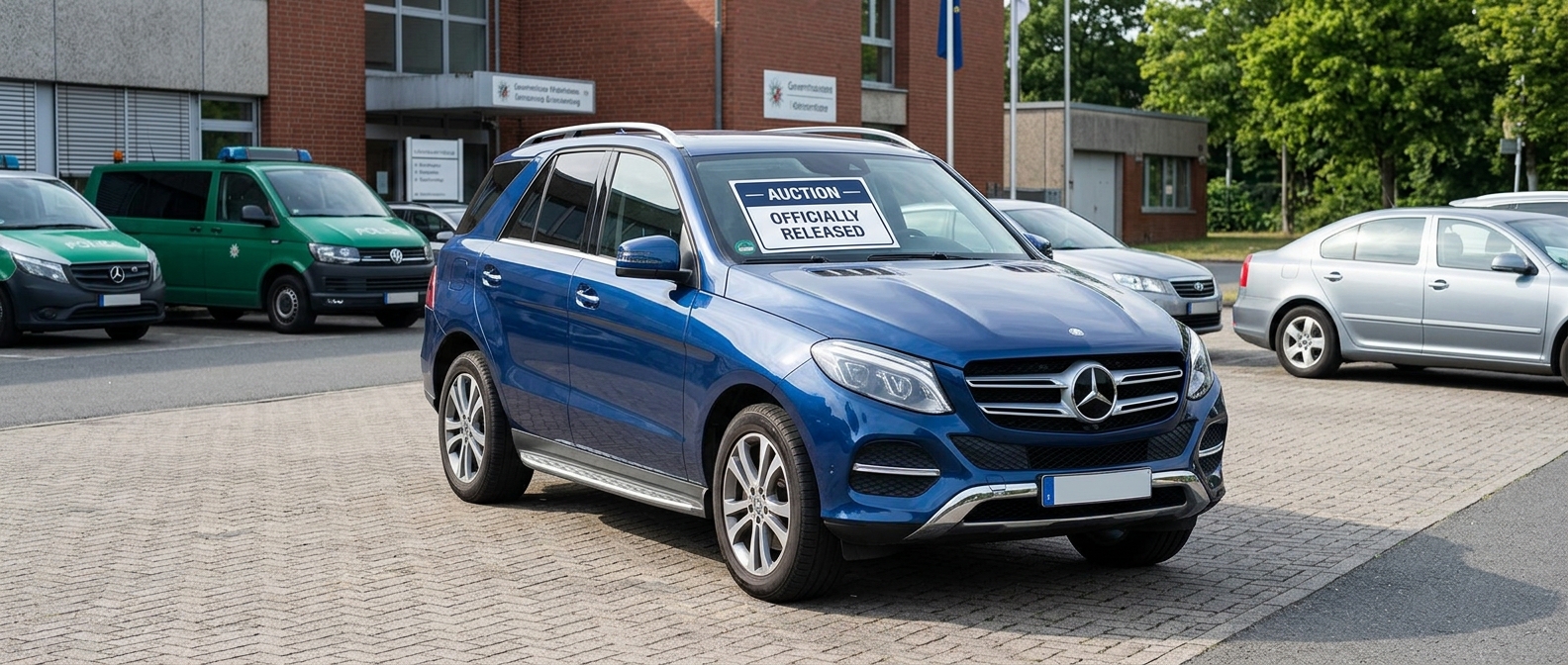
What Are Police Impound Vehicles?
Police impound vehicles, known in Germany as sichergestellte Fahrzeuge or beschlagnahmte Fahrzeuge, are cars and SUVs taken off the road by law enforcement or judicial authorities. This can happen for a range of reasons:
- The vehicle was used in connection with a criminal investigation
- The owner failed to pay fines or taxes
- The vehicle was abandoned or left unclaimed after an accident
- Customs (Zoll) authorities confiscated it at the border
Once the legal process is complete, these vehicles are typically auctioned off. SUVs are among the most commonly listed vehicle types - and they often come from relatively recent model years.
Who Organizes These Auctions in Germany?
Several official bodies are responsible for auctioning seized or impounded vehicles in Germany. Understanding who runs what can save you a lot of time in your search:
- State police authorities (Landespolizei): Each German federal state manages its own inventory of impounded vehicles
- Customs Authority (Zollverwaltung): The German customs office regularly auctions confiscated goods, including vehicles
- Insolvency administrators (Insolvenzverwalter): Vehicles from bankrupt businesses, including fleet SUVs, are often sold this way
- Municipal authorities (Kommunalbehörden): Cities and municipalities occasionally auction unclaimed vehicles
Each of these channels operates slightly differently, with its own registration process, bidding rules, and payment terms.
What Types of SUVs Typically Appear at These Auctions?
The range of SUVs available can be surprisingly broad. You might come across well-known German and European brands, as well as Asian and American models. Common categories include:
- Compact SUVs (e.g., VW Tiguan, BMW X1, Ford Kuga)
- Mid-size SUVs (e.g., Audi Q5, Mercedes GLC, Volvo XC60)
- Full-size and luxury SUVs (e.g., BMW X5, Mercedes GLE, Land Rover Discovery)
- Commercial or fleet SUVs from company liquidations
Conditions vary widely. Some vehicles are in excellent working order, while others may have cosmetic damage or mechanical issues. It is always advisable to inspect the vehicle in person before placing a bid.
How the Auction Process Works - Step by Step
If you're new to the process, here is a simplified breakdown of how most official impound vehicle auctions in Germany are structured:
- Find an upcoming auction: Check official government websites, the Zoll auction portal (zoll-auktion.de), or platforms like Justiz-Auktionen for scheduled vehicle sales
- Register as a bidder: Most auctions require advance registration, sometimes with an identity document and a refundable deposit
- Inspect the vehicle: Viewing dates are usually announced in advance - attending in person is strongly recommended
- Place your bid: Bids can be placed online, in writing, or in person depending on the organizer
- Win and pay: Successful bidders are notified and must pay within a set timeframe, often within a few business days
- Pick up your vehicle: You'll receive the necessary transfer documents and can register the vehicle in your name
Key Things to Know Before You Bid
Buying a vehicle at a government auction is different from buying at a dealership. Here are some important points to keep in mind:
- No warranty or return policy: Vehicles are sold "as is" - what you see is what you get
- Service history may be incomplete: Not all records follow the vehicle, especially for confiscated cars
- Additional costs: Budget for taxes (typically 19% VAT if purchasing from a commercial authority), registration fees, and possible transport
- Vehicle inspection (Hauptuntersuchung / TÜV): Check when the last inspection was carried out and whether it passed
- Outstanding liabilities: In rare cases, vehicles may have unresolved parking fines or unpaid tolls - clarify this before buying
Online Platforms vs. In-Person Auctions
Germany has seen a steady rise in online auction platforms that list government and police-seized vehicles. This has made the process far more accessible for buyers across the country. Some platforms allow remote bidding, meaning you don't need to be physically present in the city where the vehicle is located. However, attending in person to inspect the vehicle is still widely recommended, as photos alone may not reveal every detail about the condition.
For those who prefer a more hands-on approach, in-person auctions held by local authorities can offer a more transparent view of the vehicle and the opportunity to ask questions directly to the auctioneer.
Is This the Right Option for You?
Police impound auctions are best suited for buyers who are comfortable with some degree of uncertainty, have done their research, and are not looking for the showroom-style buying experience. If you're flexible on model and color, willing to do a basic inspection, and patient enough to wait for the right listing - this route can lead to significant savings on a quality SUV.
It's not for everyone. But for informed buyers, it represents one of the most transparent and cost-effective ways to purchase a vehicle in Germany.
Finding the Right Auction for Your Needs
The right auction depends on your location, the type of SUV you're looking for, and your preferred buying process. State-specific auction portals, national customs platforms, and judicial auction websites all list different inventory. Comparing across sources regularly gives you the best chance of finding a suitable listing.
Because availability and pricing differ significantly between regions and vehicle types, many buyers find it helpful to search specifically for their city, region, or preferred SUV model to find the most relevant options near them.
A Practical Approach to Getting Started
Getting started doesn't require any special license or professional background. Any adult resident in Germany with a valid ID can participate in most public vehicle auctions. The process is well-regulated, and official auction houses are required to provide accurate documentation for each listed vehicle.
Whether you're a first-time buyer or someone who has purchased at auction before, taking time to understand the rules of each specific platform - and researching the vehicle's history wherever possible - makes a meaningful difference in the outcome.