
Boost Your Income with Freelance Typing Jobs as a Student
Balancing studies and finances is one of the biggest challenges students face today. The good news? Remote typing jobs have opened up a flexible, accessible income stream that fits around lectures, exams, and campus life. Whether you're a fast typist, a good listener, or simply organized and detail-oriented, there's a remote typing role that could work for you - no experience required to get started.
Why Remote Typing Jobs Are a Smart Choice for Students
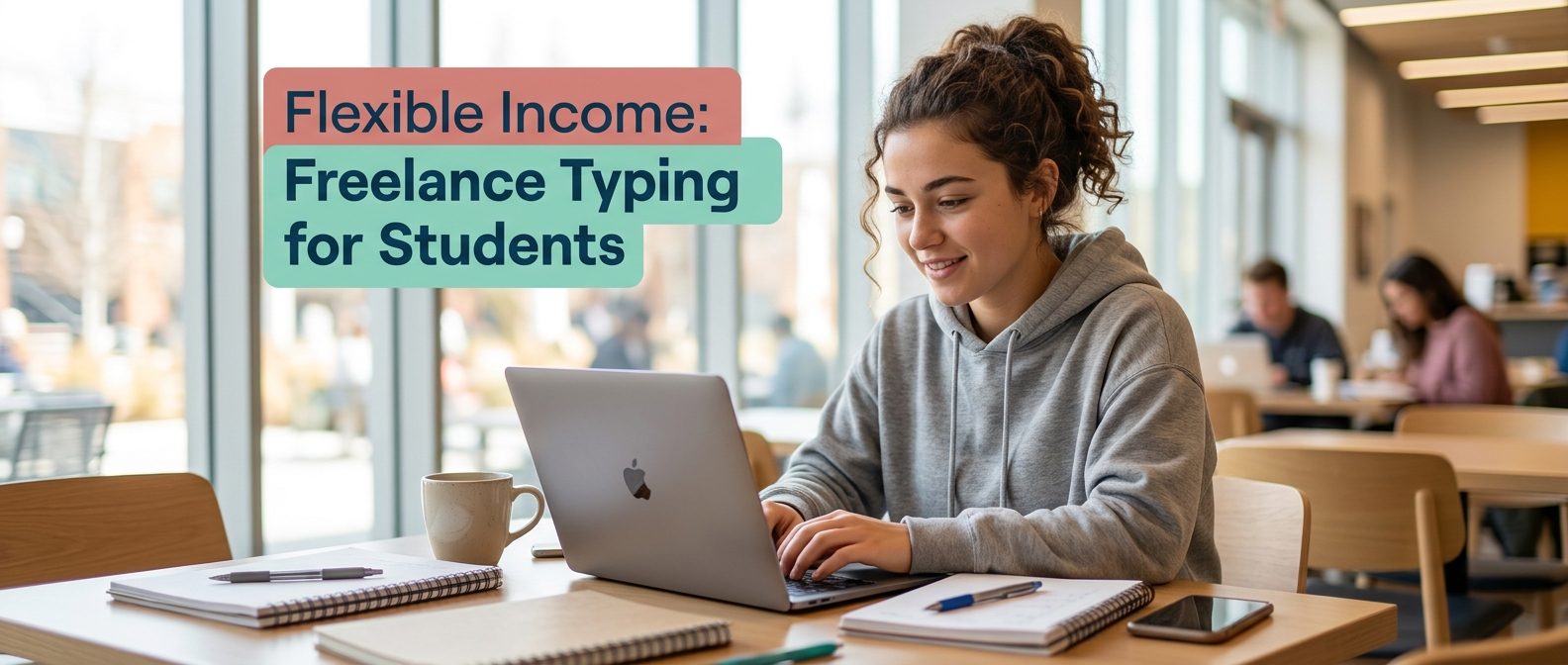
Unlike traditional part-time jobs, remote typing work offers something rare: true flexibility. You set your hours, choose your workload, and work from your dorm room, library, or anywhere with a Wi-Fi connection. There are no commutes, no uniforms, and no rigid schedules. For students managing packed academic timetables, this kind of control is invaluable.
Beyond the paycheck, these roles also build real, transferable skills - accuracy, speed, communication, and time management - that employers across every industry value.
Freelance Typing: A Low-Barrier Entry Point
Freelance typing is one of the most accessible ways for students to start earning remotely. Tasks typically include:
- Typing up handwritten notes or documents
- Formatting and editing text files
- Copy-typing from scanned images or PDFs
- Data entry for businesses and researchers
Platforms like Upwork, Fiverr, and Freelancer host thousands of these listings at any given time. Starting rates vary, but consistent, accurate work can lead to repeat clients and steadily growing income over time.
Remote Typing for Data Entry: Structured and Reliable
Data entry is one of the most in-demand remote typing roles available. Companies across industries - healthcare, e-commerce, logistics, and finance - constantly need people to input, verify, and organize data. For students, data entry jobs are appealing because:
- They often require minimal prior experience
- Work can usually be done in short, focused sessions
- Many roles are project-based, so you can take on as much or as little as suits your schedule
- They sharpen attention to detail and spreadsheet skills
Tools like Microsoft Excel and Google Sheets are commonly used, and learning them on the job adds practical tech skills to your resume.
Transcription Jobs: Enhance Listening and Typing Skills
Transcription involves listening to audio recordings and converting them into written text. It's a unique skill-builder because it trains both your ear and your fingers simultaneously. There are two main types:
- General Transcription: Transcribing interviews, podcasts, meetings, and YouTube videos.
- Specialized Transcription: Medical or legal transcription, which requires domain knowledge but pays significantly more.
For students studying journalism, communications, law, or healthcare, specialized transcription is a particularly smart fit - it reinforces academic content while generating income. General transcription is open to almost anyone with a good ear and decent typing speed.
Virtual Assistant Roles: Versatile Experience Beyond Typing
Virtual assistant (VA) roles expand on basic typing work to include a broader range of administrative tasks. As a VA, you might handle:
- Email management and scheduling
- Research and data collection
- Social media posting and content coordination
- Customer support via chat or email
- Document preparation and formatting
VA work is ideal for students who want more variety in their day-to-day tasks. It also provides strong professional experience that goes beyond just typing - exposure to business operations, client communication, and digital tools makes your resume genuinely impressive to future employers.
How Remote Typing Jobs Enhance Your Academic Skills
It may surprise you, but remote typing work actively supports your studies rather than competing with them. Here's how:
- Faster typing speed means quicker note-taking during lectures and faster essay writing.
- Transcription work trains active listening - a crucial skill in seminars and oral exams.
- Data entry builds precision and patience, useful for research projects and lab work.
- VA roles teach time management and prioritization, directly benefiting your study habits.
Many students report that the discipline required in remote work naturally carries over into more structured and productive study routines.
Tips for Getting Started
If you're new to remote typing jobs, here are a few practical steps to take:
- Test and improve your typing speed - aim for at least 50-60 words per minute. Free tools like Keybr or TypingClub can help.
- Create profiles on freelance platforms - Upwork, Fiverr, and PeoplePerHour are good starting points.
- Check job boards regularly - sites like Indeed, FlexJobs, and Remote.co list legitimate remote typing positions.
- Build a simple portfolio - even a few sample documents or a short transcription sample can help you stand out.
- Start with smaller projects - build your ratings and reviews before committing to larger workloads.
Finding the Right Role for Your Skills and Schedule
Not every remote typing job is the same, and the best fit depends on your academic schedule, current skill level, and long-term goals. A pre-med student might gravitate toward medical transcription, while a business student might prefer data entry or virtual assistant work. Exploring the full range of options - and understanding what each role truly involves - is the key to making a smart, sustainable choice.
Researching specific job types, platforms, and pay rates in your area of interest will give you a much clearer picture of where to focus your energy and time.
A Flexible Path Forward
Remote typing jobs represent one of the most student-friendly income opportunities available today. They're flexible, skill-building, and genuinely accessible - no special degree or prior work history needed. Whether you're drawn to data entry for its structure, transcription for its variety, or virtual assistant roles for their professional depth, there's a path worth exploring. Take the time to research your options thoroughly, and you may find a role that supports both your finances and your academic growth.