
The Real Reason Your Dark Spots Won't Fade
You've tried the drugstore cream. You've tried the "miracle" serum your friend swore by. Months later, that stubborn dark patch on your cheek or the sunspots on your hands are still staring back at you in the mirror. If this sounds familiar, you're not alone, and more importantly, you're not doing anything wrong. Pigmentation is one of the most misunderstood skin concerns, and most people are treating it with the wrong tools entirely.
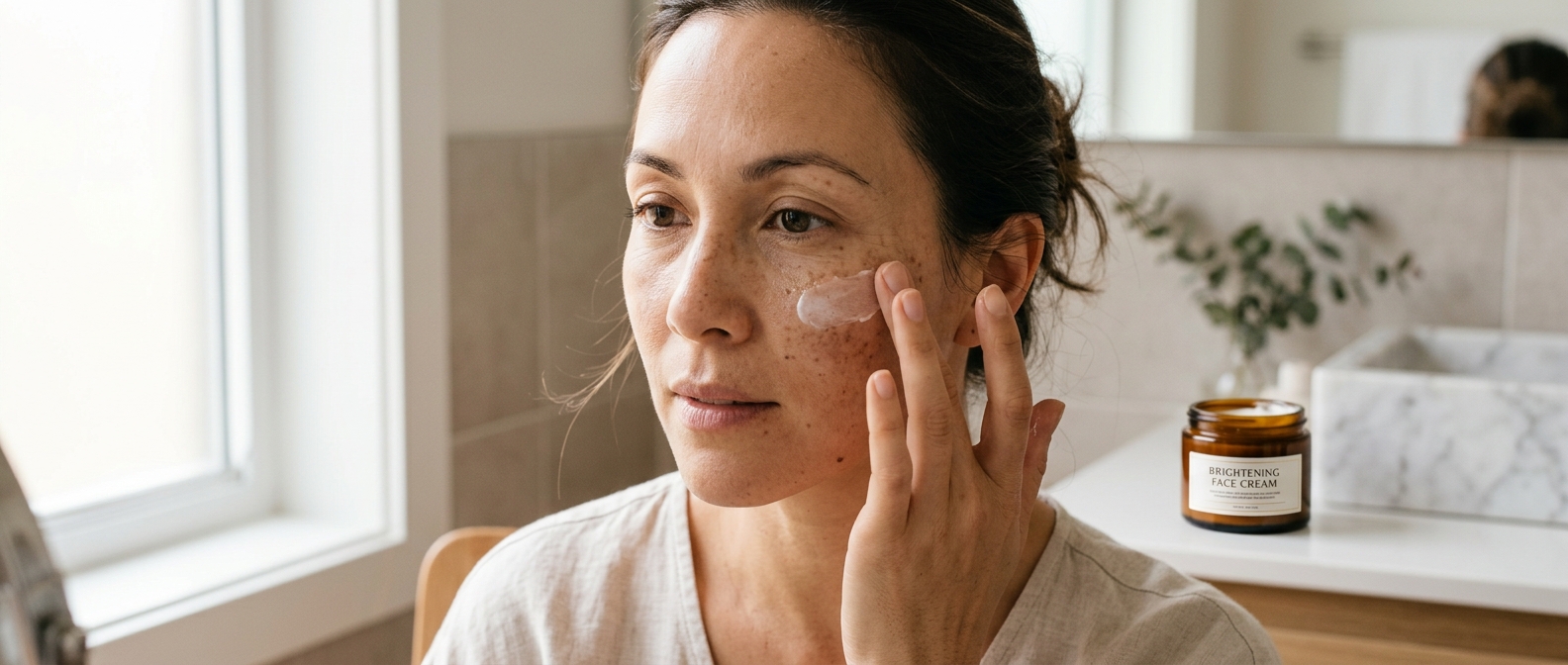
Why Dark Spots Are So Stubborn
Pigmentation isn't a single problem. It's an umbrella term covering several different skin conditions, including:
- Sun-induced age spots
- Post-inflammatory hyperpigmentation (from acne or injury)
- Melasma, often triggered by hormones
- Freckling from genetic sun sensitivity
Each of these forms at a different depth in the skin and responds to different ingredients. A cream designed for surface-level sun spots may do almost nothing for melasma sitting deeper in the dermis. This is the first reason so many people feel like "nothing works" - they're using a one-size-fits-all product on a problem that isn't one-size-fits-all.
The Old Approach: Cover It, Don't Treat It
For years, the default advice was simple: wear more concealer, avoid the sun, and wait it out. The problem is that pigmentation rarely fades on its own, especially once melanin has settled deeper into the skin. Waiting often just gives it time to darken further, particularly with continued sun exposure.
Modern dermatology has shifted away from this passive approach. Instead of masking pigmentation, the focus now is on interrupting the process that creates it - melanin overproduction - while also addressing the skin barrier that protects against future damage.
What Actually Makes a Difference
Not every ingredient with a fancy name is worth your money. Dermatologists consistently point to a small handful of ingredients with real evidence behind them:
- Vitamin C - brightens tone and protects against further UV-induced damage
- Niacinamide - reduces the transfer of pigment to skin cells
- Retinoids - speed up cell turnover, helping spots fade faster
- Azelaic acid - calms inflammation while fading discoloration
- Tranexamic acid - increasingly used for melasma-type pigmentation
The catch is that these ingredients work at different speeds and can irritate sensitive skin if used incorrectly. This is why a broad, generic recommendation rarely satisfies anyone - what works beautifully for one skin type can backfire on another.
Best Creams for Pigmentation and Dark Spots: A Quick Look
To give you a starting point, here's a general breakdown of the categories most commonly recommended for dark spots and pigmentation:
- Vitamin C serums/creams - best for early sun damage and dullness, gentle enough for daily use
- Niacinamide-based creams - good for sensitive or acne-prone skin needing gradual brightening
- Retinoid creams - stronger option for deeper, more established spots, typically used at night
- Azelaic acid creams - dual-purpose for pigmentation and mild acne-related redness
- Tranexamic acid formulas - often recommended for melasma or hormonal pigmentation
Many of these come in different strengths, price points, and formulations depending on skin type, region, and whether they're available over-the-counter or through a dermatologist.
Why Consistency Beats Intensity
One of the biggest misconceptions is that a stronger cream equals faster results. In reality, over-applying active ingredients often causes irritation, which can trigger even more pigmentation - a frustrating cycle known as post-inflammatory hyperpigmentation.
Dermatologists generally recommend:
- Introducing one active ingredient at a time
- Applying consistently for at least 8-12 weeks before judging results
- Pairing treatment with daily SPF, since UV exposure can undo progress almost instantly
This is less exciting than a "miracle fix," but it's the approach that actually holds up over time.
The Missing Piece: Personalization
Here's where most generic advice falls short. Skin tone, pigmentation type, climate, and even budget all affect which cream will genuinely work for you. A formula praised in a magazine roundup may be completely unsuitable for your skin type or unavailable at a price point that makes sense for your routine.
This is exactly why so many people end up searching for more specific answers, like which creams are formulated for their exact skin tone, which options are dermatologist-recommended for melasma versus sunspots, or which affordable alternatives perform similarly to higher-end brands.
The right pigmentation cream isn't the one with the most impressive packaging or the loudest marketing. It's the one matched to your specific skin concern, tone, and budget. That's a detail no general guide, including this one, can fully answer without knowing your individual skin profile.
Where to Go From Here
If you're ready to move past trial and error, the next step is looking into options tailored to your specific situation, whether that means dermatologist-recommended creams for your skin tone, budget-friendly alternatives to high-end brands, or formulas designed specifically for melasma versus sun damage. Comparing these more targeted options is often what finally turns frustration into visible progress.
Final Thoughts
Pigmentation is treatable, but only when the approach matches the problem. Understanding the categories of creams available, and how they align with your specific skin type, is the foundation for making a more informed choice. From here, exploring more detailed, personalized options is the natural next step toward finally addressing those dark spots for good.