
AI Dress Brand Monitoring: The Complete Guide for 2026
The fashion industry has always moved fast. But in 2026, it moves at the speed of an algorithm. Dress brands that once relied on seasonal trend reports and showroom instincts are now turning to artificial intelligence to track what consumers want, what competitors are doing, and where the next big silhouette is coming from - all in real time. This guide breaks down exactly how AI dress brand monitoring works, why it outperforms traditional methods, and what every fashion-forward brand should understand about the technology shaping the industry today.
 What Is AI Dress Brand Monitoring?
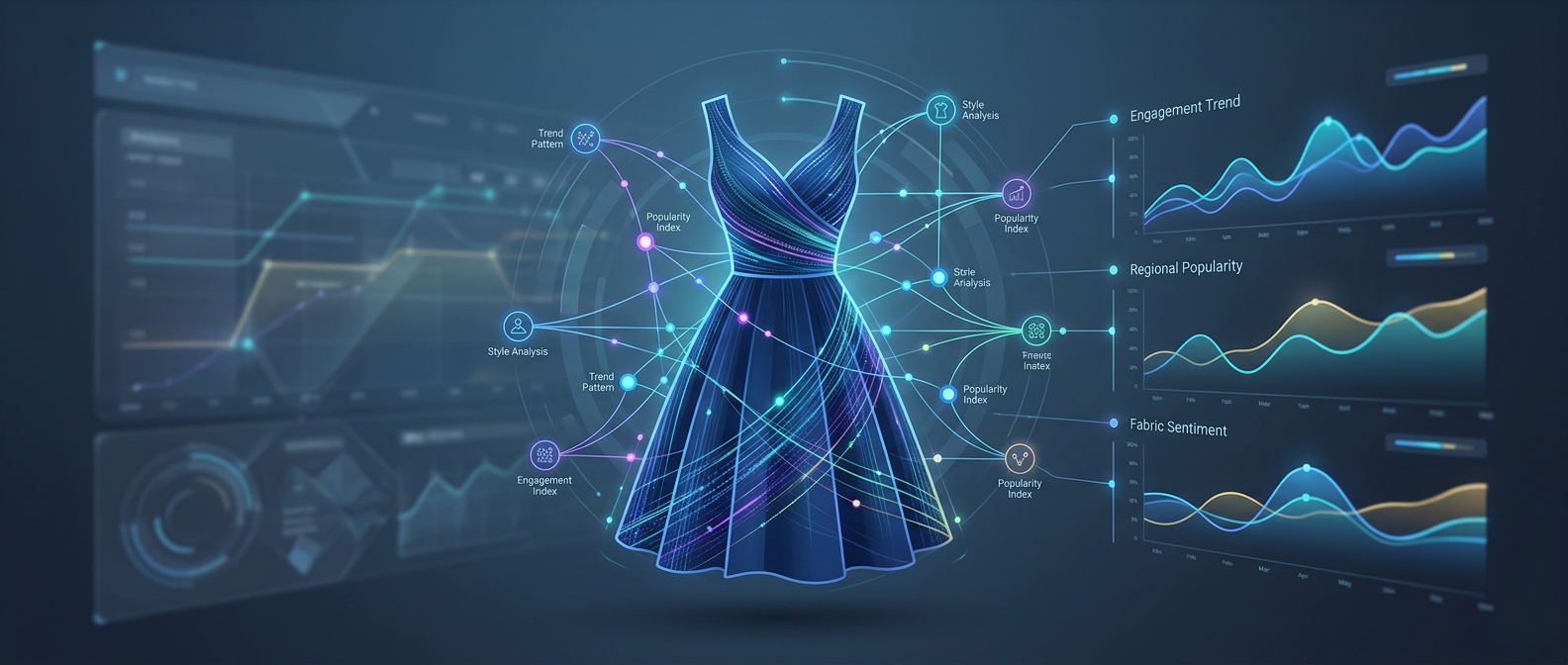
AI dress brand monitoring is the use of artificial intelligence tools - including computer vision, natural language processing (NLP), and machine learning models - to continuously track a brand's presence, performance, and competitive positioning across digital channels.
For dress brands specifically, this means:
- Tracking how and where your brand's dresses appear online - even without a direct tag or mention
- Monitoring competitor pricing, inventory shifts, and marketing strategies in real time
- Identifying emerging style trends before they peak on the mass market
- Measuring consumer sentiment across social media, reviews, and search data
Unlike manual brand tracking, AI does this continuously, across millions of data points, 24 hours a day.
How AI Monitoring Differs From Traditional Fashion Forecasting
Traditional fashion forecasting relied on a combination of runway analysis, trade show observations, consumer surveys, and the intuition of experienced trend analysts. Reports were published seasonally - often 12 to 18 months in advance - and brands had to commit to large production runs based on educated guesses.
AI monitoring fundamentally changes this model in several key ways:
- Speed: AI analyzes trends in real time rather than in seasonal cycles. A silhouette going viral on TikTok today can be flagged by an AI system within hours.
- Scale: Traditional forecasters reviewed hundreds of sources. AI systems process millions of images, posts, and search queries simultaneously.
- Objectivity: Human forecasters carry biases. Machine learning models base predictions on pattern recognition across massive, diverse datasets.
- Specificity: AI can detect hyper-granular attributes - like the rise of a specific sleeve length or embroidery style - that might be invisible in broad trend reports.
- Accuracy: Platforms like WGSN's TrendCurve AI have reported accuracy rates of up to 94% for trend projections made up to a year in advance.
How Machine Learning Tracks Fashion Trends Today
Modern AI fashion monitoring is built on a foundation of multimodal machine learning - meaning these systems analyze both visual content and text simultaneously for a richer, more accurate picture.
Here is how it works in practice:
- Computer Vision: AI algorithms continuously scan and analyze millions of images across Instagram, Pinterest, TikTok, street style blogs, and runway archives. For a dress brand, the model can detect thousands of micro-attributes - a shift from midi to micro-mini hemlines, a surge in asymmetric cuts, or the growing popularity of a specific floral print scale.
- Natural Language Processing (NLP): NLP engines parse consumer reviews, search engine queries, fashion forums, and social media captions to understand sentiment. This helps brands distinguish between a short-lived viral moment and a trend with genuine staying power.
- Demand Sensing: Rather than only reflecting what is popular right now, advanced ML models use historical seasonality data, regional buying patterns, and cultural signals to predict what will sell 6 to 12 months ahead.
- Visual Share of Voice: AI tools can identify a brand's dresses or logos in user-generated content across the web - even when the brand is not explicitly tagged - giving a true measure of organic visibility and consumer engagement.
Key Players in AI Fashion Monitoring
The AI fashion intelligence space has matured significantly. Several platforms now lead the market:
- Heuritech: Founded by machine learning researchers, Heuritech analyzes millions of social media images daily and can detect over 2,000 specific fashion attributes. It is particularly strong for regional trend differentiation.
- Stylumia: Known for its "True Demand" sensing technology, Stylumia filters out noise in trend data to help brands understand what consumers actually intend to buy - not just what they engage with online.
- WGSN (TrendCurve AI): The established forecasting giant has integrated deep learning models with human analyst oversight, combining the speed of AI with the nuance of expert interpretation.
- T-Fashion: Focused on social momentum tracking and runway analysis, T-Fashion helps brands generate design concepts with a lead time advantage over competitors.
Competitive Intelligence: Watching What Rivals Do
Beyond trend tracking, AI brand monitoring has become a powerful competitive intelligence tool. Dress brands can now use machine learning to:
- Monitor competitor inventory levels and detect when specific styles sell out or go on markdown
- Track a rival's pricing strategy shifts in real time
- Identify gaps in the competitive landscape - styles that are underserved but growing in consumer demand
- Benchmark their own brand's social visibility against direct competitors
This level of market intelligence was previously available only to the largest players with dedicated research teams. AI has democratized access to these insights.
The Business Impact: Why It Matters for Dress Brands
The practical benefits of AI monitoring extend well beyond trend reports. Brands integrating these tools are seeing real operational improvements:
- Reduced overproduction: By accurately predicting which styles will resonate in which regions, brands can right-size production runs and reduce costly deadstock.
- Faster go-to-market: Agile brands are using real-time AI trend signals to trigger small-batch production almost immediately after a style begins gaining traction online.
- Smarter assortment planning: Data-driven assortment decisions replace gut-feel buying, leading to stronger sell-through rates across seasons.
- Sustainability benefits: Less overproduction means less waste - a growing priority for both brands and consumers in 2026.
What to Look for When Exploring AI Monitoring Solutions
For anyone researching AI dress brand monitoring options, a few key factors are worth investigating:
- Data sources: Does the platform monitor the channels most relevant to your target customer - TikTok, Instagram, Pinterest, resale platforms?
- Attribute granularity: How specific can the AI get? Can it detect neckline variations, fabric textures, or color palette shifts at a micro level?
- Regional capabilities: Fashion trends are not global monoliths. Can the system track differences between markets?
- Integration: How well does the platform connect with existing design, merchandising, or supply chain workflows?
- Transparency: Does the platform explain how its predictions are made, or is it a complete black box?
Searching for the Right AI Brand Monitoring Tools
The landscape of AI fashion monitoring tools is broad, and the best fit for any dress brand depends on specific needs - whether that is competitive benchmarking, trend forecasting, social listening, or supply chain optimization. For brands at the research stage, exploring how different platforms approach these challenges is the most valuable starting point. Understanding the terminology - demand sensing, visual AI, NLP sentiment analysis - helps in evaluating which solutions genuinely deliver on their promises and which are simply repackaging older analytics tools with a new label.
AI dress brand monitoring is no longer a feature of the future - it is a working reality reshaping how fashion brands operate today. From detecting micro-trends in social imagery to tracking competitor markdowns in real time, machine learning has given dress brands a level of market intelligence that simply did not exist a decade ago. Whether you are exploring these tools for the first time or deepening your understanding of how they work, the knowledge itself is a competitive advantage.